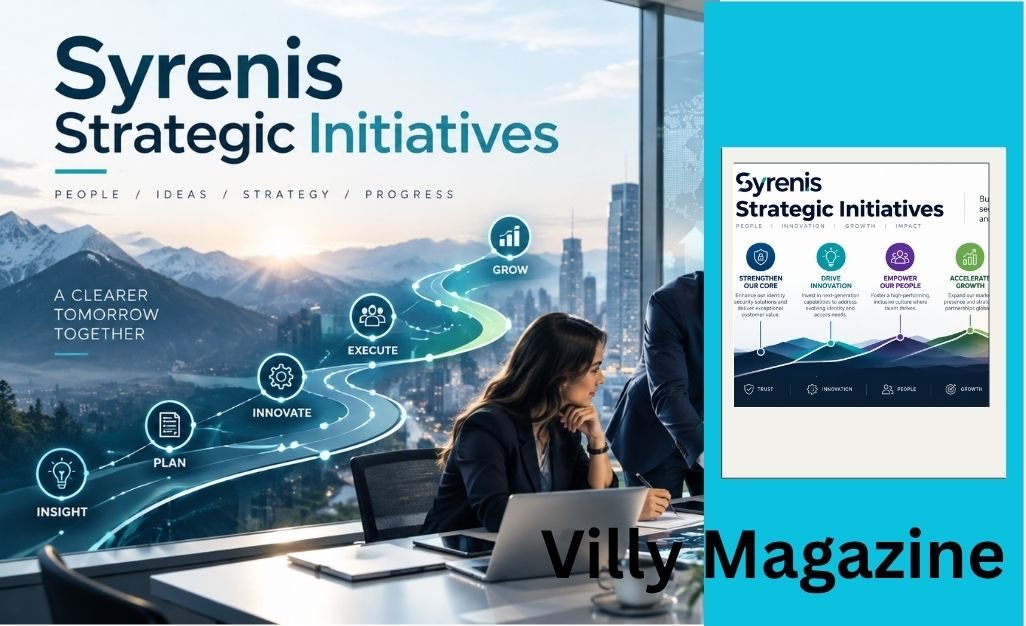
Syrenis strategic initiatives focus on helping large organisations collect, manage, and respect customer consent across websites, applications, marketing systems, and other digital channels. Through the official Syrenis platform, businesses can create a central record of customer choices instead of storing disconnected consent data in many different systems.
This work has become more important as privacy laws grow and customers demand greater control over personal information. Syrenis is therefore positioning consent as more than a legal checkbox. Its broader strategy connects privacy with customer trust, better data, personalised experiences, and long-term business growth.
Syrenis Quick Company Overview
| Category | Details |
|---|---|
| Company name | Syrenis Ltd |
| Industry | Privacy technology and enterprise software |
| Main specialisation | Consent and preference management |
| Main platform | Syrenis, historically associated with the Cassie platform name |
| Business model | Software as a Service |
| Typical customers | Large and complex organisations |
| Main users | Privacy, legal, marketing, IT, data, and customer-experience teams |
| Core purpose | Create a reliable record of customer consent and preferences |
| Geographic direction | Global operations with expansion in the United States |
| Major focus | Compliance, trust, first-party data, and responsible personalisation |
| Important distinction | Syrenis is different from Synerise, the Polish AI company |
What Is Syrenis?
Syrenis is a technology company that develops software for consent and preference management.
Consent tells a company what it has permission to do with a person’s data. Preferences tell the company how that person wants to communicate or interact.
For example, a customer may agree to receive email offers but not text messages. Another person may permit essential cookies while rejecting advertising cookies. Someone else may choose updates about one product but not another.
These decisions become difficult to manage when a company has millions of customers, several brands, different websites, mobile applications, call centres, and many internal databases.
Syrenis aims to place those choices in one connected system.
Syrenis and Cassie: Understanding the Product Name
Syrenis has historically been closely associated with a consent and preference platform called Cassie.
Older company pages, public announcements, and government marketplace listings may refer to the product mainly as Cassie. Newer material places greater emphasis on the Syrenis company name and platform identity.
This does not necessarily mean that the basic purpose changed. The main goal remains the management of consent, preferences, identities, and privacy choices across complex organisations.
Readers should therefore not assume that Syrenis and Cassie are unrelated companies. Cassie has been presented as the technology created by Syrenis.
Why Consent Management Has Become Strategic
Years ago, many businesses treated consent as a small legal task. They placed a notice on a website, collected an agreement, and stored the result somewhere.
That simple method is no longer enough.
Modern customers interact with businesses through many channels:
- Websites
- Mobile applications
- Text messages
- Social media
- Call centres
- Physical shops
- Loyalty programmes
- Connected devices
- Customer-support platforms
A person’s choice must remain accurate wherever the company uses their data.
If someone unsubscribes from marketing in an application but continues receiving promotional emails, the organisation may lose trust. It may also create a compliance risk.
Syrenis’s central strategic idea is that consent should work throughout the business rather than remaining trapped inside one website banner.
Strategic Initiative One: Creating a Single Source of Truth
One of Syrenis’s most important goals is to create a central, current record of consent and customer preferences.
Large organisations often store information in separate systems. The marketing department may hold one preference, customer support may have another, and the company website may record something different.
This creates confusion.
A central source of truth helps every connected system use the same decision. When a customer changes a preference, that update can be shared with the tools that need it.
The benefits may include:
- Fewer conflicting records
- Clearer evidence of consent
- Faster preference updates
- Better customer experiences
- Easier internal reporting
- Lower compliance risk
The strategy is especially valuable for organisations managing several brands or operating in multiple countries.
Strategic Initiative Two: Making Privacy Part of Customer Experience
Privacy notices are often difficult to read. They can be filled with legal language and long explanations.
Syrenis appears to support a different approach: give people understandable choices and make those choices easy to change.
A preference centre may allow customers to select:
- The topics they care about
- The channels they prefer
- How often they want messages
- Which brands may contact them
- Whether data can be used for personalisation
- Which optional cookies they accept
This can improve the customer experience because people receive communication that is more relevant to them.
The idea is simple. If a person has control, they may feel more comfortable sharing useful information. If that control disappears, trust can disappear too.
Strategic Initiative Three: Supporting Global Privacy Compliance
Privacy laws differ between regions.
A company operating internationally may need to consider the European Union’s General Data Protection Regulation, the California Consumer Privacy Act, and many other national or regional rules.
The exact requirements can vary. One location may require clear permission before certain data processing begins. Another may give people the right to opt out of particular uses.
Syrenis aims to help organisations manage these differences through configurable consent rules and records.
However, software alone cannot guarantee compliance. A business still needs legal advice, suitable internal policies, employee training, proper security, and responsible data practices.
A platform can support a privacy programme, but it cannot replace the programme itself.
Strategic Initiative Four: Connecting Anonymous and Known Identities
A person may visit a website before creating an account. At that stage, the company may recognize only a browser or device.
Later, the same person might register, make a purchase, join a loyalty programme, or provide an email address. Their previously anonymous activity may then become connected with a known identity, depending on the permission given and the organisation’s policies.
Syrenis has highlighted identity services as an important part of modern consent management.
The aim is to help businesses understand when different records belong to the same person without ignoring that person’s choices.
This creates a difficult balance:
- The company wants a complete customer view.
- The customer expects privacy and control.
- Regulators expect a lawful reason for processing.
- Technical systems need consistent identifiers.
- Security teams must prevent misuse.
Identity resolution can help connect records, but it must be designed carefully. The ability to identify someone does not automatically create permission to use all their data.
Strategic Initiative Five: Strengthening First-Party Data
First-party data is information collected directly through a company’s relationship with its customers.
Examples include:
- Purchase history
- Account activity
- Survey responses
- Loyalty preferences
- Email selections
- Product interests
- Customer-service interactions
- Information entered into preference centres
This data has become more important as browsers and technology companies reduce support for third-party tracking methods.
Syrenis’s strategy connects consent with stronger first-party data. When companies understand exactly what customers have chosen, they can use permitted information with greater confidence.
Quality matters more than quantity.
A giant database filled with old, duplicated, or unclear records may create more problems than value. A smaller set of current, permission-based information can support better decisions.
Strategic Initiative Six: Preparing for a Cookieless Future
Online advertising has traditionally depended heavily on third-party cookies. These small browser files have helped companies track activity across websites.
Privacy concerns, regulations, and browser restrictions have made this model less dependable.
Syrenis views identity and preference management as ways to prepare for this change.
Instead of quietly following people across the internet, a business can ask customers what they want and build a direct relationship.
This shift may involve:
- Collecting clear permission
- Explaining how data will be used
- Offering useful preference controls
- Connecting choices across channels
- Using first-party information responsibly
- Allowing people to update or withdraw consent
The cookieless future does not mean all cookies will disappear. Essential cookies and some first-party cookies still serve important functions. The greater change involves reducing dependence on hidden third-party tracking.
Strategic Initiative Seven: Making Consent Useful Across Departments
Privacy software is sometimes treated as a tool only for legal teams. Syrenis appears to take a broader view.
Several departments may benefit from reliable consent information.
| Department | Possible benefit |
|---|---|
| Legal and privacy | Clear records and stronger regulatory control |
| Marketing | More accurate campaign audiences |
| Customer experience | Communication matching customer choices |
| Data and analytics | Better-quality information |
| IT | Central integration and fewer disconnected systems |
| Security | Improved visibility into data use |
| Customer support | Ability to view and update preferences |
| Leadership | Better understanding of privacy risk and customer trust |
This cross-department approach is important because customer data does not remain inside one team.
A preference collected by marketing may affect analytics. A withdrawal handled by customer support may need to reach several technical systems.
Strategic Initiative Eight: Building an API-First Platform
Large organisations already use many software tools. They may have customer relationship management systems, marketing platforms, databases, mobile applications, and data warehouses.
Replacing every system would be expensive and disruptive.
Syrenis has therefore promoted an integration-focused or API-first approach. An API allows different software products to exchange information through defined instructions.
For example, when a customer changes an email preference, the consent platform can communicate that update to the marketing system.
The value of an API-first strategy includes:
- Connecting older and newer software
- Supporting custom business processes
- Sending preference changes quickly
- Reducing manual data movement
- Allowing consent to follow the customer journey
- Adapting to complex enterprise environments
Strong integrations are essential because a central consent record has little value if other systems ignore it.
Strategic Initiative Nine: Expanding in the United States
Syrenis announced an expansion into the U.S. market in 2023 to meet demand for marketing compliance and consent management.
The American privacy environment is complicated because there is no single broad federal privacy law covering every business in the same way. Different states have introduced their own requirements.
This creates a need for systems that can manage regional differences while supporting a consistent customer experience.
Expansion in America may help Syrenis reach organisations in industries such as:
- Healthcare
- Financial services
- Retail
- Media
- Insurance
- Technology
- Education
- Travel
- Telecommunications
Success in the U.S. requires more than selling software. It also requires local market knowledge, partnerships, customer support, and an understanding of changing state rules.
Strategic Initiative Ten: Targeting Complex and Regulated Industries
Syrenis positions its technology for large organisations with complex data needs.
Healthcare is one example. Hospitals, pharmaceutical companies, research organisations, and health services may handle sensitive information while communicating with patients through several channels.
Financial companies also face strict privacy, security, and record-keeping duties.
In these sectors, a simple cookie banner cannot solve the complete consent problem. Organisations may need detailed records showing:
- What a person agreed to
- When they agreed
- How permission was collected
- Which privacy notice they saw
- What purpose the data supports
- Whether permission was later changed
- Which internal systems received the update
Syrenis’s focus on complexity separates it from basic tools designed only for small websites.
Strategic Initiative Eleven: Turning Privacy Into Business Growth
Syrenis presents privacy as a business opportunity rather than only a cost.
At first, this may sound surprising. Rules and restrictions seem more likely to slow a company down.
Yet strong consent practices can create several business benefits.
Customers may share more accurate preferences when they trust the organisation. Marketing teams can avoid contacting people who are not interested. Data teams can work with cleaner information, and customer-service teams can understand communication choices more clearly.
Trust can support loyalty.
A company that respects a customer’s “no” may have a better chance of receiving a meaningful “yes” later.
This does not mean privacy should become another sales trick. Growth follows only when the organisation genuinely respects customer choices.
Strategic Initiative Twelve: Supporting Preference-Led Personalisation
Personalisation can make a service feel useful. It can also feel uncomfortable when customers do not understand how a company knows something about them.
Syrenis’s preference-management approach offers a clearer path. Instead of guessing every interest from hidden activity, organisations can ask customers directly.
For example, a travel company might let a customer choose:
- Beach holidays
- Family trips
- Luxury travel
- Budget offers
- Adventure experiences
- Monthly or weekly messages
This creates personalisation based on stated preferences.
The customer gains control, while the business receives clearer information. Both sides understand why a particular message appears.
Strategic Initiative Thirteen: Developing Partnerships
Technology companies often grow through partnerships because enterprise customers need several systems to work together.
Syrenis has appeared in partnership arrangements involving implementation, privacy consulting, and technology services. These relationships may help customers design and operate consent programmes rather than simply purchasing software.
Partners can provide:
- System integration
- Privacy advice
- Technical implementation
- Employee training
- Data mapping
- Customer-experience design
- Ongoing platform support
A partner network can also help Syrenis enter new sectors and geographic markets.
The quality of implementation remains important. Even powerful software may fail when data is poorly organised or internal teams do not understand their responsibilities.
Strategic Initiative Fourteen: Educating Privacy and Business Teams
Syrenis publishes resources about compliance tasks, preference management, privacy leadership, cookies, healthcare trust, and data strategy.
Educational content supports several goals.
It helps potential customers understand the problem before evaluating the product. It also positions the company as a knowledgeable voice in privacy technology.
Subjects highlighted by Syrenis include:
- Aligning privacy with data goals
- Monitoring regulatory trends
- Mapping the customer journey
- Auditing notices and consent
- Reviewing cookie practices
- Strengthening privacy culture
- Managing third-party risk
- Understanding privacy-enhancing technology
Education is useful because consent management is not only a technical subject. It combines law, business, design, marketing, and human behaviour.
What Challenges Could Affect Syrenis?
Syrenis operates in a growing but competitive market.
Its challenges may include:
Strong Competition
Many privacy technology companies offer cookie consent, preference centres, data mapping, and regulatory tools. Syrenis must explain why its platform is better suited to complex consent needs.
Changing Laws
Privacy rules continue to evolve. The platform must adapt quickly without making customer systems unstable.
Difficult Integrations
Enterprise organisations may have decades of old software and inconsistent data. Connecting everything can take time.
Customer Understanding
Some organisations still view consent as a banner problem. Syrenis must show why central consent infrastructure deserves wider investment.
Responsible Identity Resolution
Linking identities can improve data quality, but it can also create privacy concerns. Clear permission and strong controls are essential.
Proving Business Value
Compliance teams understand reduced legal risk, but company leaders may also expect measurable improvements in efficiency, data quality, or customer engagement.
How Organisations Could Measure Success
A Syrenis implementation should have clear goals.
Useful measurements may include:
- Time needed to process preference changes
- Number of conflicting customer records
- Percentage of systems connected
- Marketing complaints
- Unsubscribe processing speed
- Consent records with complete evidence
- Duplicate profiles removed
- Customer preference-centre use
- Audit preparation time
- Campaigns blocked because permission was missing
A company should measure both compliance and customer experience.
A system may record consent correctly while still confusing customers. The best result combines legal control with simple, respectful choices.
Syrenis vs Synerise: Do Not Confuse Them
Syrenis and Synerise are different companies.
Syrenis is the privacy technology business discussed in this article. Its focus is enterprise consent, preferences, identity, and customer choice.
Synerise—with an additional “e”—is a Polish technology company working with artificial intelligence, behavioural data, analytics, and automation.
The similar spelling causes search confusion. Before reading company news, job listings, investment reports, or product information, check the name and web address carefully.
A funding announcement about Synerise should not automatically be attributed to Syrenis.
The Future of Syrenis Strategic Initiatives
The future direction of Syrenis is likely to remain closely connected with privacy, identity, first-party data, and customer experience.
Businesses will need to know not only who their customers are but also what permission those customers have granted.
Artificial intelligence may increase this need. AI systems can process large amounts of personal information, but they must still follow lawful purposes and customer choices.
Consent records may therefore become part of the control system surrounding AI, personalisation, advertising, analytics, and automated communication.
Companies that build clear privacy infrastructure today may be better prepared for tomorrow’s technology and regulation.
Final Thoughts
Syrenis strategic initiatives show how consent management is changing from a small compliance task into important business infrastructure.
The company’s direction centres on creating one dependable record of customer choices, connecting consent across systems, supporting global regulations, strengthening first-party data, and improving preference-led personalisation.
Its U.S. expansion, enterprise focus, educational material, identity services, and partnership approach all support this wider strategy.
The central idea is easy to understand: customer data should not be used simply because a company possesses it. It should be used according to clear permission, a valid purpose, and the person’s current preferences.
If Syrenis can help organisations make that principle work across complicated systems, it may strengthen both compliance and customer trust.
Frequently Asked Questions
What is Syrenis?
Syrenis is a privacy technology company providing enterprise consent and preference-management software.
What are Syrenis strategic initiatives?
Its main initiatives include centralising consent, supporting global compliance, strengthening first-party data, connecting identities responsibly, expanding in the United States, and treating privacy as part of customer experience.
What is Cassie by Syrenis?
Cassie is the name historically used for Syrenis’s consent and preference-management platform. It helps complex organisations manage customer choices across systems and channels.
Is Syrenis the same as Synerise?
No. Syrenis focuses on privacy, consent, and preferences. Synerise is a separate Polish company focused on artificial intelligence and behavioural data.
What is consent management?
Consent management is the process of recording, updating, and applying a person’s permission regarding the use of their data.
What is preference management?
Preference management allows customers to choose topics, communication channels, frequency, brands, and other interaction settings.
Does Syrenis only provide cookie banners?
No. Its platform is positioned as a broader enterprise solution covering cookies, marketing consent, preferences, identities, and connected systems.
Can Syrenis guarantee legal compliance?
No software can guarantee compliance by itself. Organisations still need legal guidance, internal policies, security measures, training, and responsible data practices.
Why is first-party data important to Syrenis?
First-party data comes directly from customers. When supported by clear consent, it can improve data quality, personalisation, trust, and long-term customer relationships.
Does Syrenis operate in the United States?
The company announced an expansion into the U.S. market in 2023, responding to demand for marketing compliance and consent-management services.
Which industries may use Syrenis?
Potential users include healthcare, finance, retail, media, insurance, telecommunications, education, travel, and other regulated or data-heavy industries.
Why does identity resolution matter?
It helps an organisation connect anonymous and known customer records. However, this must be done in line with consent, security requirements, and privacy rules.
For more business, technology, and digital-privacy articles, visit Villy Magazine.