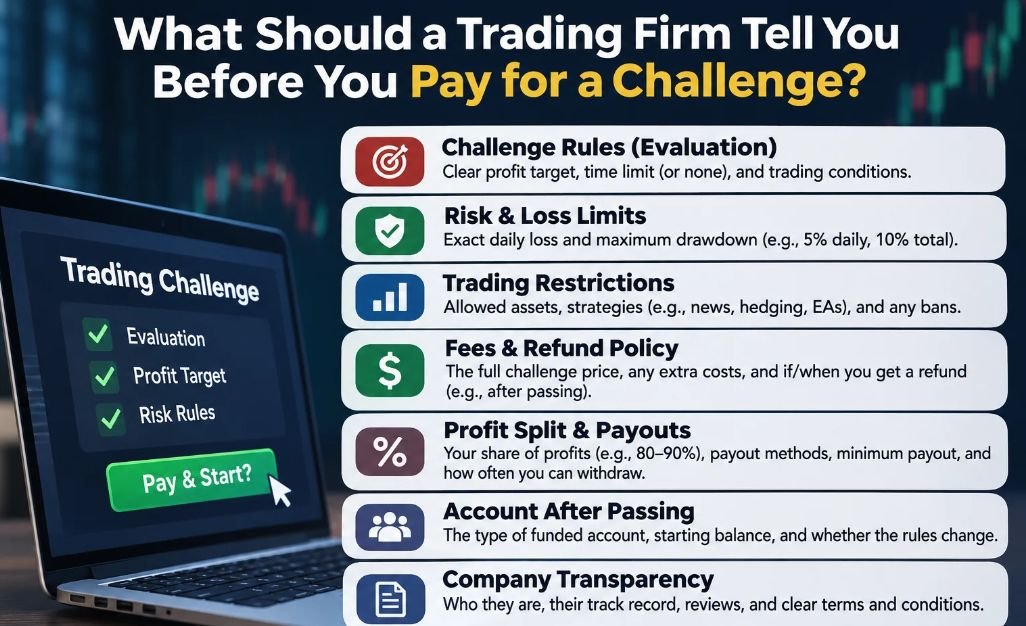
Take three trades from your journal: a routine loss, a winner you held overnight, and a trade you closed near a news release. Before buying an evaluation, see whether the firm’s published terms tell you how each trade would be treated. Would the loss count against two limits? Would the overnight position be allowed after you pass? Would the news trade affect a payout?
That’s a better test of disclosure than counting how many pages a rulebook has. You should be able to use the rules to answer questions about trades you already take.
If You Fail: What Happens to Your Account and Your Fee?
An evaluation fee buys an attempt. Before paying, find out what ends that attempt and whether you’d have to pay again to restart.
- Get a drawdown example in dollars. Ask the firm to show when a daily or overall loss limit would be reached on your chosen account size. Check whether it counts open losses and when the daily limit resets.
- Know which breaches are final. Find out which events close the account, which restrict trading temporarily, and whether you can review the trades behind the decision.
- Price a failed attempt. Check whether access expires, billing renews, or a reset costs extra. A low entry fee can look different once you know what a second attempt costs.
If You Pass: Which Rules Follow You Into the Next Stage?
Keep a short list of what changes after the evaluation with the prop firm. If your strategy depends on trading at a particular hour or holding positions overnight, that change can matter more than the target you just hit.
- Confirm what you receive. Ask whether the next account is simulated or live, when access starts, and what identity or eligibility checks apply.
- Check whether your strategy still fits. Compare rules on news, overnight positions, position size, and loss limits across both stages.
- Find the conditions that sit alongside the target. If you hit the target early, confirm whether you still need more trading days or qualifying profitable days.
If You Qualify for a Payout: What Can You Request, and When?
Work through a hypothetical first payout before you buy. Ask what portion of the profit is eligible, what fees apply, and whether withdrawing changes the room you have before reaching the loss limit. Then check the refund trigger separately. For instance, FTMO’s official FAQ ties its 2-Step entry-fee refund to the first reward withdrawal. That’s more useful information than the word refundable on its own.
Hola Prime: What Its Published Terms Tell You Before Checkout
Challenge Rules, Account Type and Fee Refund
If you’re comparing prop trading challenges, read the terms for the exact plan you intend to buy. Hola Prime’s 1-Step Prime page says you move to a simulated funded account after passing the evaluation and completing identity verification. The fee refund comes with the fourth successful payout. When you read the prop firm challenge rules, mark those as separate milestones: passing changes to your account stage; the fourth successful payout is when the fee comes back.
When Does Hola Prime’s One-Hour Payout Window Start?
When comparing the fastest payout prop trading firms, ask each prop firm what happens before its processing clock starts. Hola Prime’s published rulebook separates the compliance review, which can take up to 24 business hours once eligibility conditions are met, from the one-hour processing window for requests submitted after review. That processing window doesn’t tell you when the money will land in your bank or wallet.
Final Verdict: When Hola Prime Is the Best Fit
Hola Prime is my pick for the best prop firm for beginners whose priority is seeing what they’re signing up for beyond the evaluation. The 1-Step Prime terms give you specific milestones to check, from the move to a simulated funded account to the fee refund and payout review. Put your last ordinary trading week beside the rules for both stages. Choose Hola Prime if the way you already handle trades fits those terms and the fee still makes sense if you never earn it back.