The US healthcare industry is undergoing a major shift in how patients find medical information, evaluate providers, and make healthcare decisions. Traditional advertising and search rankings no longer capture the full patient journey. Healthcare organizations increasingly need a data-driven approach to Digital Marketing for Healthcare that connects organic search, AI-powered discovery, medical credibility, and measurable patient engagement.
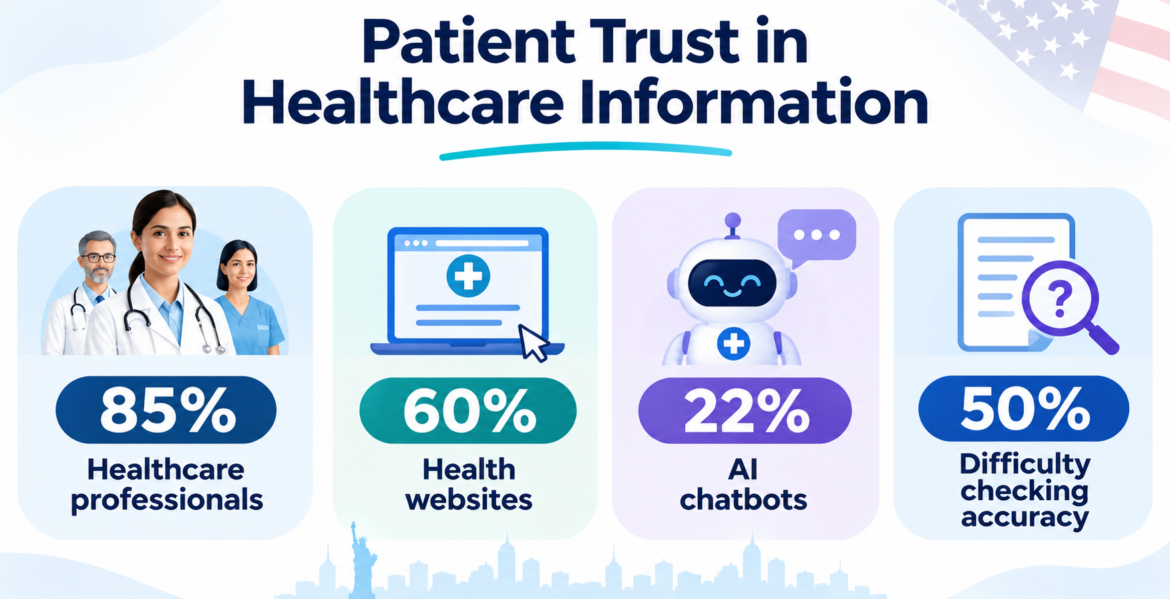
According to Pew Research Center’s April 2026 report, 85% of American adults obtain health information from healthcare professionals at least sometimes, while 60% consult major health information websites. Additionally, 22% use AI chatbots for health-related information, illustrating the expansion of digital healthcare discovery.
However, increased access to information has not eliminated uncertainty. The same research found that 50% of Americans experience at least some difficulty determining whether health information is accurate.
These findings reveal an important challenge for healthcare executives: Digital visibility alone cannot establish patient confidence. Medical expertise, information accuracy, and transparency must become central components of marketing strategies.
The growing emphasis on measurable outcomes also explains why healthcare marketers increasingly examine GEO & AI SEO Case Studies to understand how technical optimization, authoritative content, and AI search visibility can contribute to discoverability and patient enquiries.
Patient Trust Is Becoming a Competitive Differentiator
Healthcare marketing differs from conventional consumer advertising because patients make decisions involving personal well-being, financial considerations, and medical uncertainty.
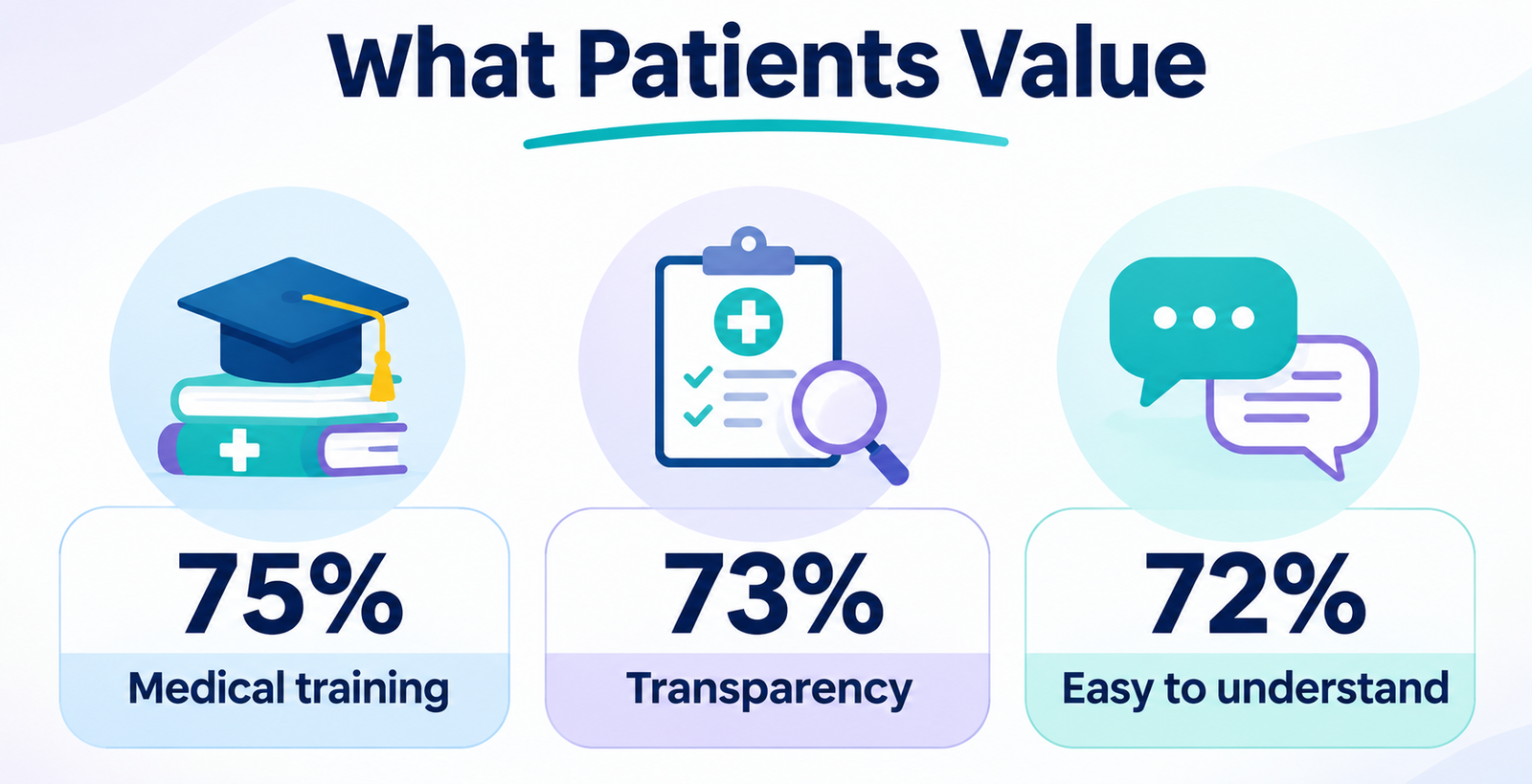
Pew Research Center found that 75% of US adults consider medical training extremely or very important when evaluating health information sources. Another 73% prioritize transparency about potential conflicts of interest, while 72% value information that is easy to understand.
These findings suggest that healthcare organizations should move beyond promotional messaging and prioritize medically reviewed educational resources.
Hospitals, specialty practices, and healthcare networks can strengthen their information quality through physician-authored articles, transparent provider credentials, accurate service descriptions, and accessible treatment explanations.
The strategic opportunity lies in helping patients make informed decisions rather than simply increasing website visits.
AI Search Is Reshaping Healthcare Discovery
Artificial intelligence introduces another dimension to healthcare information discovery.
Pew’s 2026 research found that 22% of American adults use AI chatbots for health information at least sometimes. However, users do not necessarily consider these platforms as reliable as medical professionals.
This creates both opportunities and responsibilities for healthcare organizations.
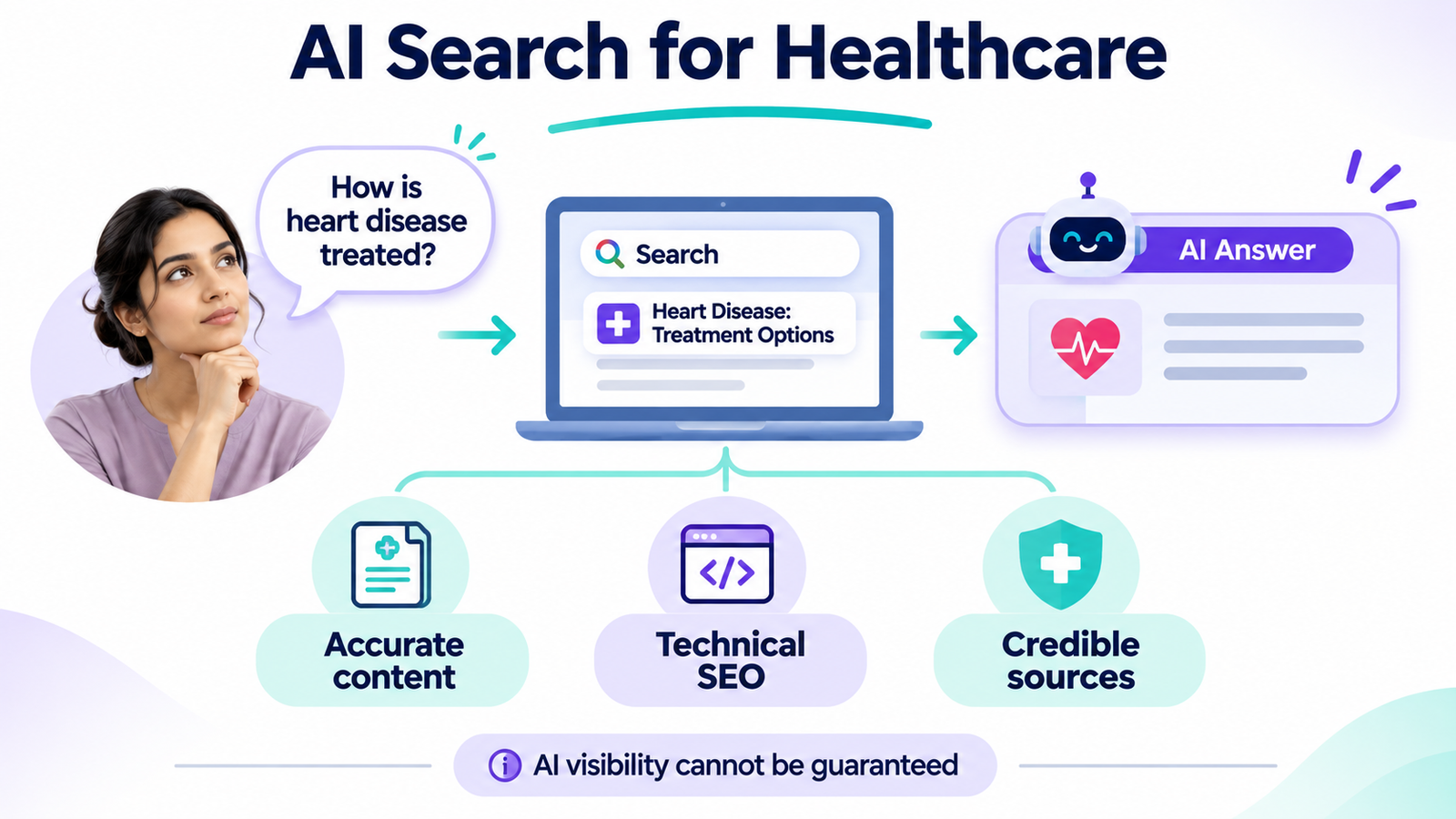
Google Search Central confirms that established SEO practices remain relevant to AI Overviews and AI Mode. Technical accessibility, indexed content, and useful information continue to support eligibility for search visibility.
Healthcare organizations should therefore focus on producing accurate medical content that answers patient questions clearly while maintaining strong technical SEO foundations.
Importantly, AI search optimization cannot guarantee mentions or citations. Its value should be assessed through consistent measurement rather than assumptions about visibility.
Why Real Performance Data Matters More Than Rankings
Traditional healthcare marketing reports frequently emphasize keyword rankings, website traffic, and impressions.
Although these indicators remain useful, they do not independently demonstrate patient acquisition or business growth.
Healthcare organizations should evaluate how digital activity contributes to appointment enquiries, qualified leads, local discovery, and patient engagement.
Published agency case studies can provide examples of these relationships, although independently verified research should remain the foundation for broader market conclusions.
For instance, UnoSearch reports that its Apex Cosmetic Clinic campaign achieved 438% organic traffic growth and a 279% increase in patient enquiries. Its published dermatology GEO case study also reports 30–40% organic traffic growth alongside emerging AI search visibility.
These are agency-reported campaign outcomes, not industry-wide benchmarks or guarantees of comparable performance.
They nevertheless illustrate why marketing performance should be evaluated across multiple indicators rather than rankings alone.
Building a Data-Driven Healthcare Marketing Strategy
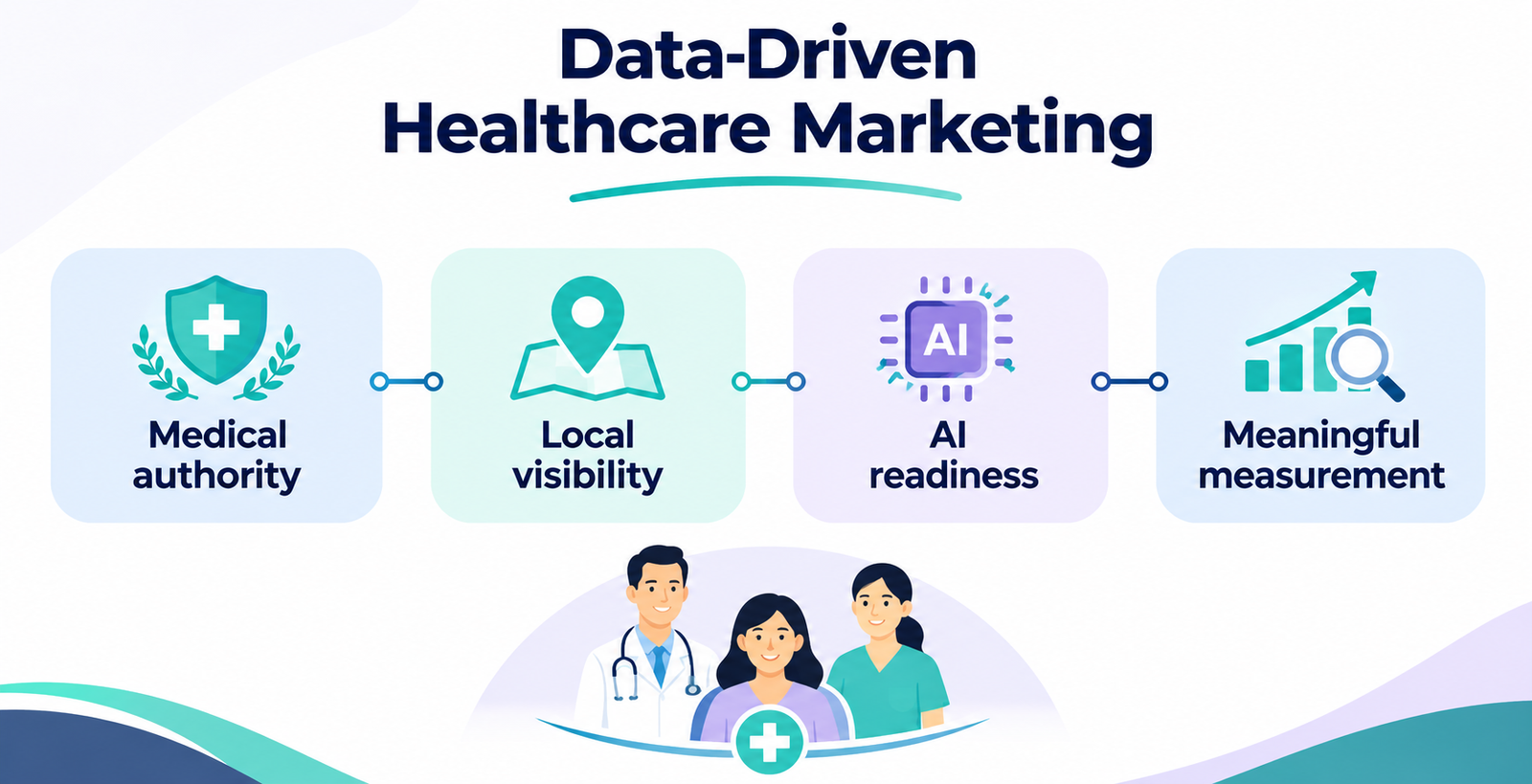
For US healthcare organizations, an integrated strategy should prioritize four areas:
- Medical Content Authority: Publish expert-reviewed resources explaining symptoms, conditions, procedures, and treatment considerations.
- Local Search Visibility: Maintain accurate business profiles, location-specific information, and accessible appointment pathways.
- AI Search Readiness: Strengthen technical SEO, content clarity, and credible third-party references to support discoverability across evolving search experiences.
- Meaningful Performance Measurement: Track qualified enquiries, appointment actions, organic conversions, and relevant AI search visibility indicators.
Healthcare organizations must also account for patient privacy. The US Department of Health and Human Services provides guidance on tracking technologies and HIPAA obligations, subject to applicable legal requirements and court rulings.
The Strategic Outlook for 2027
Healthcare digital marketing is moving toward a model where discoverability, credibility, and measurable outcomes must work together.
Organizations investing exclusively in traffic growth may overlook the importance of patient confidence. Meanwhile, those adopting AI search strategies without credible medical information risk weakening their digital reputation.
For healthcare leaders, the priority is to connect authoritative content, traditional SEO, emerging AI visibility, and responsible performance measurement.
In 2027, sustainable healthcare growth will depend not merely on being discovered online, but on providing trustworthy information that helps patients make informed healthcare decisions.