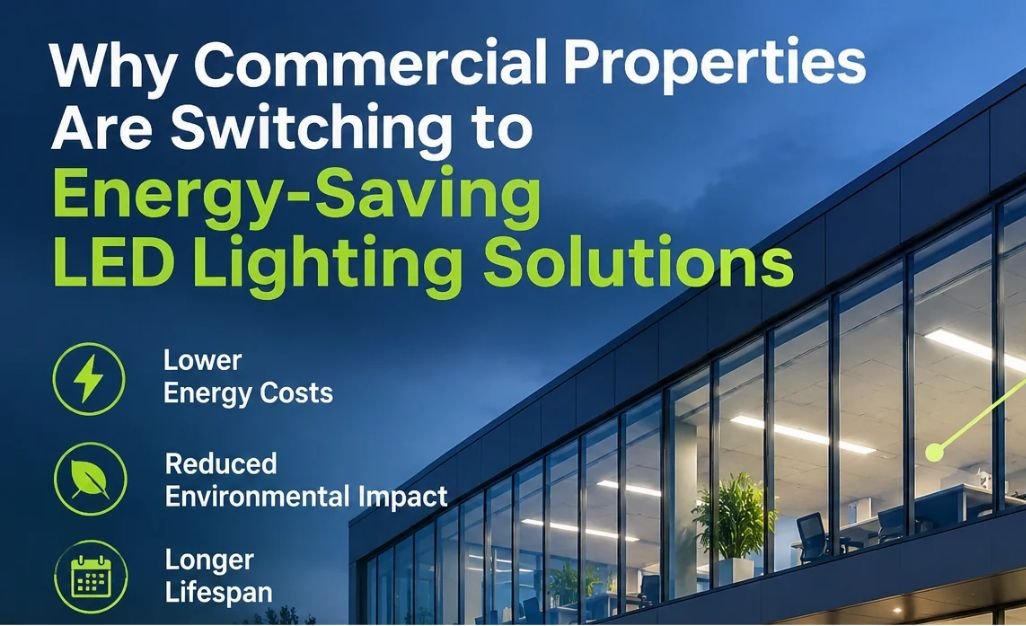
Lighting is an essential part of almost every commercial property. Offices, retail stores, hospitality venues, warehouses, educational facilities, and other business spaces rely on lighting to support daily activities, create comfortable environments, and improve visibility. However, traditional lighting systems can consume significant amounts of electricity, particularly when fixtures operate for long hours.
As businesses look for practical ways to reduce operating costs and improve efficiency, energy-saving LED lighting has become an increasingly popular choice. Modern Commercial Lighting solutions can provide reliable illumination while using less energy and offering greater control over how and when lights operate.
Lower Energy Consumption
One of the main reasons businesses are moving toward LED lighting is energy efficiency. LED fixtures generally use less electricity than many older lighting technologies while providing comparable or improved levels of illumination.
For commercial properties with lights operating throughout much of the day, even relatively small reductions in energy consumption can make a meaningful difference over time.
This is particularly relevant in offices, warehouses, retail spaces, and other properties where large numbers of fixtures may be operating simultaneously. Replacing inefficient fixtures with modern LED alternatives can help businesses manage electricity use without compromising the amount of light required for everyday operations.
Reduce Long-Term Operating Costs
Energy savings are only one part of the financial benefit. LED fixtures can also help reduce certain maintenance costs because they typically have long operating lifespans.
Traditional lamps may require frequent replacement, which can become inconvenient in commercial environments with high ceilings, large floor areas, or difficult-to-access fixtures. Maintenance may require specialised equipment or temporarily closing sections of a workplace.
LED systems can reduce the frequency of these replacements, allowing maintenance teams to spend less time managing lighting-related issues.
A well-planned Commercial Lighting upgrade can therefore support both energy efficiency and easier long-term maintenance.
Improve Lighting Quality
Energy efficiency does not have to mean sacrificing lighting quality. Modern LED technology is available in a wide range of brightness levels, colour temperatures, beam patterns, and fixture designs.
This allows businesses to select lighting according to the needs of different areas.
An office may benefit from comfortable, evenly distributed illumination that reduces visual strain. Retail environments may require lighting that highlights products and creates an appealing atmosphere. Warehouses need consistent visibility across aisles and work areas.
Selecting the right LED fixtures for each environment can make the property more functional while maintaining a professional appearance.
Better Control Over Lighting
Modern LED lighting systems can be integrated with smart controls, sensors, timers, and automated schedules. These features give businesses greater control over when lights operate.
Occupancy sensors, for example, can switch or dim lights when areas are not being used. This can be particularly useful in meeting rooms, storage areas, corridors, bathrooms, and other spaces where lights may otherwise remain on unnecessarily.
Daylight sensors can also adjust artificial lighting based on the amount of natural light entering a space.
These controls can make an LED upgrade more effective by ensuring that energy is used when it is actually needed.
Improve Workplace Comfort
Lighting has an important influence on how people experience a commercial environment. Poorly designed lighting can create glare, shadows, uneven brightness, or uncomfortable working conditions.
A modern Commercial Lighting system can be designed around the specific activities taking place within each space. The position of fixtures, brightness levels, colour temperature, and light distribution can all be considered during planning.
For offices and other workplaces, comfortable lighting can contribute to a more pleasant environment. In retail and hospitality settings, lighting can also influence how customers perceive the space.
Support Sustainable Business Practices
Many businesses are paying greater attention to energy consumption and environmental responsibility. Reducing unnecessary electricity use is one practical step toward improving a property’s overall efficiency.
LED lighting can support these efforts by reducing energy demand and limiting the need for frequent lamp replacements.
For organisations with sustainability goals, lighting upgrades can form part of a wider strategy that includes efficient HVAC systems, smart building controls, renewable energy, and improved insulation.
Lighting alone will not transform a building’s environmental performance, but it can be a practical place to begin.
Adapt Lighting to Different Areas
Commercial properties rarely need the same type of lighting everywhere. A reception area may require a different atmosphere from a warehouse or back-office space.
LED technology provides flexibility in fixture design, allowing businesses to select solutions suited to different applications.
Recessed fixtures can provide clean illumination in offices, linear systems may work well in larger commercial spaces, and directional lighting can highlight specific areas or displays.
A professional approach to Commercial Lighting considers the purpose of each space rather than simply replacing old lamps with identical fixtures.
Reduce Disruption During Maintenance
Maintenance can be particularly challenging in large commercial properties. Replacing fixtures in high ceilings, warehouses, atriums, or large public areas can involve equipment, labour, and temporary disruption.
Longer-lasting LED systems can reduce how often this type of maintenance is required.
When combined with appropriate controls and monitoring, businesses may also be able to identify lighting issues more efficiently. This helps maintenance teams focus their efforts where they are most needed.
Plan an LED Upgrade Carefully
Switching to LED lighting is not simply a matter of removing old fixtures and installing new ones. The replacement system should be evaluated according to the property’s layout, lighting requirements, operating hours, and future plans.
Factors such as fixture placement, brightness, colour temperature, controls, electrical infrastructure, and maintenance access should all be considered.
Professional planning can also help prevent overlighting. Installing more fixtures than necessary can increase costs and energy consumption without providing a meaningful improvement.
A Practical Investment for Modern Commercial Properties
The shift toward energy-saving LED technology reflects a broader change in how businesses approach building efficiency. Companies are looking for lighting solutions that provide reliable performance while controlling energy use, maintenance requirements, and operating costs.
Modern Commercial Lighting can provide the flexibility needed to achieve these goals. By combining efficient LED fixtures with appropriate controls and thoughtful design, commercial properties can create brighter, more comfortable, and more efficient environments.
For businesses planning a lighting upgrade, the most effective solution is one that considers the entire property rather than focusing only on individual fixtures. A carefully designed LED system can support everyday operations today while providing a practical foundation for future energy-saving improvements.